
Carpenter ants are more than just a nuisance; they cause significant damage to wooden structures, especially in areas like New Lenox, where homes may have older wooden beams or outdoor structures that are more susceptible. Like other species of ants, carpenter ants have a sophisticated social structure and caste system.
First, it’s important to note that it’s extremely rare for most people to encounter a queen. That’s because it’s the job of the colony to protect the queen, so she stays hidden in a wood nest most of the time. Understanding her role is key to managing these pests effectively. A single colony may have multiple queens.
A carpenter ant nest or colony is a dynamic ecosystem with complex social structures, the habitat of thousands of these swarmers, often hidden in the wooden structures of homes and businesses in New Lenox.

Understanding Carpenter Ants
These ants are among the largest ant species you might encounter around your home.
What Do Carpenter Ants Look Like?
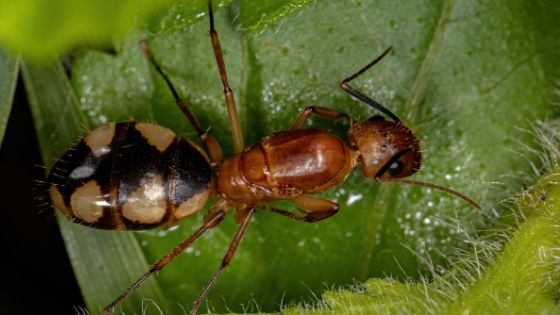
These ants are mostly black, but some species exhibit red or yellowish coloration. Workers vary in size, typically ranging from 6 to 12 mm long, making it easier to spot them as they forage for food.
Males are generally smaller and have wings, like the queen. The queen is considerably larger, often exceeding 13 mm in length.
How to Identify a Carpenter Ant Queen
The queen is not just another ant; her large size and bulkier body, especially her thorax and abdomen, make her stand out.
-
How to Identify the Queen: Physical Characteristics
Initially, she has wings longer than those of the males, which she sheds after her nuptial flight.
-
Where Can You Find A Carpenter Ant Queen In Your Home?
Finding a queen in your home can be challenging, as she typically nests in moist, decaying wood. During the warmer months, the queen might be deep inside wood structures like window frames, decks, or porches.
In colder seasons, she might move to more protected areas within your home, like behind insulation or inside wall voids.
The Biology and Role of a Carpenter Ant Queen
The queen ant is much larger than other ants in the colony and may measure up to an inch in length. The queen ant’s longevity and egg production are vital to colony development. Her primary role is reproduction.
These pests feed on other insects, both alive and dead, as well as plant nectars and juices, honeydew, syrup, jelly, sugar, salt, fruits, meat, grease, and fat
-
Mating and Reproduction
Queens leave the nest in a “nuptial swarm” in the spring. The fertile males die soon after, and the females disperse to start their own new colony. A mated queen will find a good spot for a nest, ideally in rotten wood like a tree stump or a fence post.
Like other ant species, the queens are responsible for laying eggs. Winged male swarmers exist to reproduce with female swarmers. The queen lays thousands of eggs over her lifetime, which can span several years.
-
Life Cycle
The queen’s life cycle is fascinating and integral to her colony’s survival. The eggs she lays hatch into larvae, which are entirely dependent on her for nourishment. Over several weeks, the larvae grow and eventually pupate. The pupae emerge as adult ants, ready to take on their roles within the colony.
Carpenter Ant Colonies
-
Colony Formation
During the spring or early summer, the queen finds a suitable location, often a moist wooden structure, to lay her eggs. This pivotal role of the queen is crucial as she alone lays the eggs that will populate the entire colony. As these eggs hatch and mature, the first batch of worker ants expands the nest and cares for the queen and the young.
Colonies are structured with remarkable efficiency, consisting of a main nest where the queen resides. Unlike termites, they do not eat the wood but carve out galleries to accommodate their growing numbers.

Signs and Risks of Infestation
While digging, they clean up as they go, pushing the resulting sawdust out of the nest. Indeed, piles of sawdust near a hole in the wood are one sign of an infestation.
Common signs include spotting worker ants inside the home.
Signs of Infesting Ants
The physical signs include small openings on the surface of wood, through which ants eject debris. This results in piles of frass near wooden structures like windowsills and door frames.
Identifying and Controlling Infestations
Detecting and managing infestations is crucial for maintaining your home’s structural integrity. These ants typically establish colonies within wood structures, making early detection challenging.
Prevention and Control Strategies
For ant control in New Lenox, homeowners should eliminate moisture around their property, as these ants are attracted to damp wood. Ensure leaks in roofs, pipes, and windows are fixed promptly. Trim tree branches touching your home’s exterior to block ant pathways.
Specific Questions About Carpenter Ant Queens
-
What size are carpenter ant queens compared to the rest of the colony?
Typically, a queen can measure up to one inch in length, making her almost twice the size of worker ants. This size difference is significant and helps in identifying the queen during an inspection of the ant colony.
-
Look for Where they Excavate
A new nest can be found in hollow structures like house walls or insulation, where they excavate tunnels in the wood.

-
Does the Queen Have Wings?
Yes, carpenter ant queens initially have wings. They use these wings to leave the colony during the mating period, known as the nuptial flight. They then shed their wings upon finding a suitable location to establish a new colony.
-
Is there an effective method to show the queen the door?
A.N.T. Pest Control offers specialized treatments that target the queen, which is crucial for the long-term management of the colony. Techniques such as baiting can lure worker ants to carry insecticides back to the queen, or direct treatments can be applied to the nest once located.
Professional Pest Control Solutions
How to Find and Get Rid of a Carpenter Ant Queen?
To control carpenter ant queens, you should locate and destroy their nests.
A.N.T. Pest Control uses targeted treatments to eradicate the queen, mate, and nest. These might include baits that are carried back to the nest, directly impacting the queen and her brood.
Why Choose A.N.T. Pest Control?
Choosing A.N.T. Pest Control means opting for expertise and precision. DIY methods often fall short because they fail to eliminate the queen, allowing the colony to rebound.
The benefits of hiring us include:
-
Expert Knowledge: Technicians are equipped with information on the latest behavior and treatment techniques.
-
Safety: All treatments are applied safely to protect your family and pets.
-
Effectiveness: Professional-grade solutions are more reliable and long-lasting compared to store-bought products.
-
Peace of Mind: Knowing that the job is done right the first time lets you relax and enjoy a pest-free home.
Reach Out to A.N.T. Pest Control
Don’t let these ants undermine the comfort of your home. Contact A.N.T. Pest Control today and take the first step towards a secure, ant-free environment. Our friendly professionals in New Lenox are here to provide you with the best ant control solutions tailored to your unique situation.


