
Most carpenter ant species establish their first nest in decayed wood, later expanding into undamaged wood, insulation, or wall voids. You might see the winged queens and males during the spring or early summer. Tunneling may cause serious structural damage if it occurs in key timbers, but nest sites rarely exceed a few square feet.
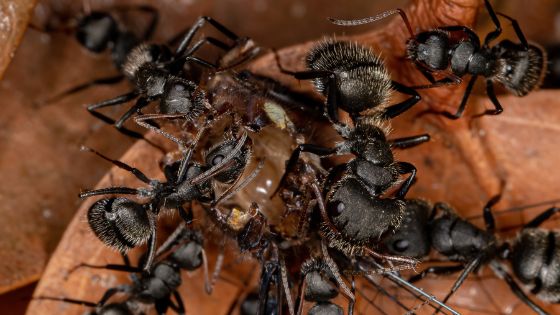
Carpenter ant nests consist of irregular tunnels (galleries) in which eggs are laid. Termite frass is usually scattered around their nest beneath damaged wood.
The red and black carpenter ant has a reddish-brown head and thorax with a black gaster. Its workers are 1/4-inch to 1/2-inch long.
Identifying Carpenter Ant Frass
Carpenter ant frass is the garbage from a carpenter ant colony excavated from the wood they’re damaging. It contains debris from wood, carpenter ant droppings, soil, gravel, and insect parts and carcasses. The presence of coarse sawdust (frass), with an appearance similar to pencil shavings, indicates that a nest is close by. Carpenter ant droppings might be found intermingled with sawdust or wood shavings.

Structural Impact of Carpenter Ants
Carpenter ants significantly threaten your property’s structural integrity and aesthetic quality. Tunneling into wood to create their nests can compromise the strength and stability of wooden elements over time.
Common Nesting Sites for Carpenter Ants
Carpenter ants have one goal: establish an expansive nest system. Inspection is the key to successful carpenter ant control. When you find worker ants indoors, the first place you should look for signs of infestation is the structure’s exterior. Keep an eye out for:
- Large black ants roaming around your home.
-
Firewood, stumps, trees. Carpenter ant activity in a tree is often a secondary issue and can be a sign that the tree has wood rot.
- Excess moisture: Ants prefer to dig into damp deck railings or window frames.
Using Frass to Locate Carpenter Ant Infestations
When you spot small piles of what looks like sawdust in your home, you might be seeing frass, a telltale sign of ant activity. Unlike termites, carpenter ants don’t eat wood, but they excavate it to create their nests, which leads to the accumulation of frass.
Recognizing the presence of frass is crucial because it directly points to an active ant colony. These ants typically set up their nests in moist or damaged wood, which can often be hidden from plain sight, inside wall voids, under floors, or behind tiles. Consequently, finding frass can be the first clue to uncovering these concealed nests.
Early Signs of Infestations
Carpenter ants are usually found around the opening of their nests. They can also be found underneath the nesting area, such as near walls, window frames, door frames, and roof lines. Carpenter ants may form a network of trails they follow throughout a structure. They often use edge lines, the tops of electrical wires, and water pipes.
Rainy climates can lead to wood rot in window and door frames, leaving them vulnerable to carpenter ant nests.
Analyzing Carpenter Ant Frass
Analyzing the placements of frass can help you identify whether your building is infested with carpenter ants or termite colonies. Carpenter ant frass is usually found around the opening of their nests.

Practical Tips for Homeowners
Here are some practical tips for using this telltale sign to locate and address potential sites effectively:
-
Inspect the Area: Focus on areas where you’ve found piles of frass.
-
Check Moist Areas: Examine areas prone to water damage, such as near sinks, bathtubs, poorly sealed windows, and leaky roofs.
-
Follow the Trail: Sometimes, you can trace a trail of frass back to a nest. This might lead you to hollowed-out wood where the colony could be thriving.
-
Clean Up Frass: Regularly clean up any accumulations of frass. This prevents the spread of the invasion,
Left unchecked, a large colony can mean serious structural damage to your property. Consult with a professional if you see carpenter ant frass around your home or business.
Immediate Actions After Finding Frass
Here are the immediate steps to take:
-
Document the Evidence: Take photos of the frass and the areas where it is found. This can help the professionals better understand the extent of the problem.
-
Avoid Disturbance: If you think you’ve found carpenter ant frass, call a professional.
-
Seal Entry Points: While a temporary solution, sealing visible cracks and openings can help prevent more ants from entering your home.
-
Contact A.N.T. Pest Control: The most effective step is to call in the professionals. We can thoroughly inspect your home and tailor a treatment strategy.
Distinguishing Between Carpenter Ant and Termite Droppings

The first sign of their presence is the frass they leave behind, which homeowners can spot quickly. Though carpenter ant frass and termite frass look similar, there are signs that you can look at to make it easier for you to tell them apart:
It can be tricky to tell the difference between the two. However, termites eat wood.
-
Color: Frass from these insects varies depending on the wood they forage in.
-
Location: Carpenter ant nests may extend into sound wood over time.
- Termite frass doesn’t contain insect parts.
- Shape and Size: Frass from carpenter ants varies in size and looks like wood shavings, while termites produce uniform, oval-shaped frass.
A.N.T. Pest Control’s Extermination Strategies
The best control mechanism for severe infestations is to have a pest control professional apply pesticides directly to the colony headquarters.
- Our professionals will patiently follow worker ants to locate the nest.
- Using granular baits designed specifically for carpenter ants.
Reach out to A.N.T. Pest Control to Schedule a Consultation
A.N.T. Pest Control stands apart from the rest. Contact us today to schedule a consultation and receive a customized quote—your first step towards a pest-free home.


