
Can cockroaches swim? The answer isn’t as straightforward as a simple yes or no. While they don’t swim in the traditional sense, these resilient insects have developed unique ways to survive in water.
Let’s explore the fascinating abilities that allow cockroaches to navigate aquatic environments, from floating mechanisms to breath-holding skills, shedding light on their true capabilities in water, and answering the question, “can cockroach swim?”
Noteworthy Points
- A cockroach cannot truly swim. They survive in water by floating, trapping air in their bodies, and paddling with their legs, capable of holding their breath for up to 40 minutes.
- Cockroaches are attracted to moist environments and require access to water for survival, with different species showing varying levels of affinity for water and resistance to drowning.
- While difficult, cockroaches can be drowned with prolonged submersion, particularly in warm or hot water, but dealing with infestations also requires a comprehensive approach, including home maintenance and professional pest control.
Cockroach Swimming Abilities: Fact or Fiction?
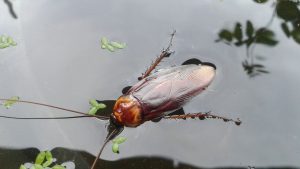
Cockroaches, intriguingly, cannot swim in the conventional sense. Rather, they display a unique form of aquatic locomotion that involves floating on the water’s surface and paddling with their legs. This frantic movement, as uncoordinated as it may seem, helps them navigate through the water.
Yet, their survival in water depends not just on their movement but also on factors like the water’s temperature and the duration they’re submerged.
In fact, it’s fascinating to know that a cockroach swim using this unconventional method.
At a glance, cockroaches might appear to be adept swimmers. This, however, is a common misconception. Enabled by their light bodies and unique structure, they float on water, thereby giving the illusion of swimming.
Floating vs. Swimming
If not swimming, what are cockroaches doing in the water?
When submerged, they trap air inside their bodies to aid buoyancy, and they close their spiracles (breathing holes) to prevent water from entering. This allows them to float on water, a far cry from the streamlined swimming of aquatic animals.
Despite their lack of swimming skills, cockroaches don’t give up in water. They resort to frantic paddling with their legs in a scramble to find an escape route.
This uncoordinated movement is their way of navigating when submerged, making them more survivors than swimmers.
Cockroach Breath-Holding Skills
One of the most impressive abilities that aid cockroaches in their aquatic survival is their ability to hold their breath.
Cockroaches possess a unique respiratory structure, allowing them to close their spiracles and prevent water intake, helping them survive underwater for extended periods. This tactic aids in their buoyancy and allows them to float for up to 40 minutes in some species.
Interestingly, American cockroaches, known for thriving in sewers and drains, can hold their breath for 30 minutes and float for up to 40 minutes. The incredible breath-holding ability, along with their knack for floating, is key for an American cockroach survival in aquatic conditions.
The Role of Water in Cockroach Habitats

Although cockroaches show impressive survival skills in water, they are not aquatic creatures. Still, water is instrumental in their survival. In fact, cockroaches survive in moist environments to stay hydrated and prolong their existence. They can only survive a week without water, underscoring its vital role in their survival.
Cockroaches are drawn to water for its vital role in fulfilling their biological needs. This attraction to water sources often leads them to inhabit damp environments, providing the necessary moisture for their survival.
Water Sources and Roach Infestations
Cockroaches are majorly attracted to water sources in and around homes. Leaky pipes, standing water, and damp areas are among such sources that contribute to infestations.
Water roaches, a type of peridomestic cockroach, thrive in environments with easy access to water. Drawn to these water sources, they often migrate from their outdoor habitats into homes, leading to infestations. Thus, addressing water sources in homes is a crucial step in preventing and managing cockroach infestations.
Cockroach Species and Their Affinity for Water
The affinity for water varies among different cockroach species. Some species, like American cockroaches, prefer warm, damp environments like sewers and pipes. German cockroaches, on the other hand, require constant moisture and are often found in kitchens and bathrooms. In comparison, a German cockroach may also be found in similar environments due to their moisture requirements.
Oriental cockroaches, often found near home plumbing systems in cooler environments, can survive up to two weeks without food but only one week without water. Interestingly, these species of cockroaches, including the oriental cockroach, also display varied levels of resistance to drowning, with:
- German cockroaches survive in water for up to 15 minutes
- Oriental cockroaches survive in water for up to half an hour
- Brown-banded cockroaches float for a similar duration but are more affected by warm or hot water.
Drowning Cockroaches: Is It Possible?

Drowning cockroaches might seem like a practical solution to a roach problem, but in reality is far from straightforward. Though cockroaches drown, their impressive ability to stay afloat and hold their breath renders the task challenging.
A successful attempt at drowning a cockroach requires:
- Prolonged submersion in water
- The deeper the water and the longer the submersion time, the more likely a cockroach is to drown
- However, a weakened state or inability to effectively hold its breath can make a cockroach prone to drowning more quickly.
How Long Does It Take for a Cockroach to Drown?
How long does it take for a cockroach to drown? Due to their ability to float and prevent water from entering their spiracles, cockroaches can survive full submersion underwater for about 30 to 40 minutes.
However, this survival time can vary due to factors like the species of cockroaches, the water temperature, and the duration of submersion. Deeper water and longer submersion times increase the likelihood of a cockroach drowning. Yet, the submersion survival time is influenced by multiple variables that can extend or reduce their survival time underwater.
Hot vs. Cold Water: Which Is More Effective?
When it comes to killing cockroaches through drowning, the temperature of the water matters. Cockroaches can survive in cold water, requiring full submersion for up to 40 minutes before cockroaches die. However, they fare much worse in warm conditions.
Oriental and German cockroaches, for instance, are more effectively killed by exposure to warm or hot water. Cockroaches cannot survive temperatures over 125 degrees Fahrenheit (52 degrees Celsius) when directly exposed. This is the reason why heat treatments are effective in eliminating them. Thus, hot water proves to be more effective than cold water for killing cockroaches through drowning.
Cockroach Aquatic Behavior: Myths and Misconceptions

There are numerous myths and misconceptions surrounding the aquatic behavior of cockroaches. To truly understand these fascinating creatures, it’s essential to distinguish fact from fiction.
For instance, cockroaches possess strong climbing skills, which they use to try and escape when they find themselves submerged in water, even though a cockroach swim underwater.
Can Cockroaches Breathe Underwater?
Despite their aquatic abilities, cockroaches cannot breathe underwater. They survive underwater by holding their breath, a feat made possible by their tracheal system, which allows them to close their spiracles and prevent water intake, aiding their survival underwater for extended periods. Thus, while they can’t extract oxygen from water like fish, they do have adaptations that allow them to survive in aquatic conditions for a limited time.
Do Cockroaches Play Dead in Water?
Another common myth is that cockroaches play dead in water to avoid drowning. This claim, however, is not backed by scientific evidence. There is no indication that playing dead is a survival tactic employed by cockroaches in aquatic environments.
Instead, their survival in water is primarily due to their ability to float and hold their breath.
How long can a roach survive underwater?
A roach can survive underwater for up to 30 minutes by holding its breath in order to regulate water loss.
Do cockroaches like the wet?
Yes, cockroaches like wet and moist environments because they are attracted to water sources and moisture, such as leaky pipes, damp basements, and standing water.
Can a cockroach survive being flushed down the toilet?

Yes, a cockroach can survive being flushed down the toilet and may even climb back up through the drain. Be cautious to prevent this from happening.
What kills cockroaches instantly?
Boric acid is the most effective method to instantly kill cockroaches. It surpasses other methods like baking soda and onions or roach cookies.
Can cockroaches survive in water?
Yes, cockroaches can survive in water for a short period of time by holding their breath, with some other species being able to last up to 40 minutes underwater.
Aquatic Abilities of Roaches
From their ability to float and hold their breath to their unique affinity for water, cockroaches demonstrate astounding survival skills that set them apart from other insects. Though practical drowning is challenging, it’s not impossible, and their aquatic behaviors continue to intrigue us. However, prevention and effective roach pest control remain the best strategies for managing cockroach infestations, ensuring that we can admire their unique survival skills from a distance.
Preventing and Eliminating Cockroach Infestations

Understanding the aquatic abilities of cockroaches is interesting, but the primary aim for most is to prevent and eradicate infestations. Several strategies can achieve this, such as sealing potential entry points, maintaining cleanliness, and seeking professional pest control services.
Sealing and Maintenance
Preventing an infestation begins with sealing potential entry points. Open windows, cracks, pipes, and chimneys should all be sealed to prevent cockroaches from invading homes. Regular cleaning of counters, shelves, and floors is also essential to reduce the food sources that attract cockroaches.
It’s also important to manage garbage and laundry properly to prevent cockroach infestations. Here are some tips:
- Use secure containers with lids for garbage to prevent cockroaches from accessing it.
- Use metal hampers for laundry, as cockroaches are less likely to infest them.
- Regularly inspect and clean hidden nooks and crannies where cockroaches may hide.
- If you find roach eggs, remove them by scrubbing or vacuuming to prevent reproduction and reduce future populations.
By following these steps, you can effectively kill cockroaches and prevent future infestations, ensuring you kill roaches in the process.
Pest Control Options
Once an infestation has taken place, chemical pesticides and professional pest control services can effectively eliminate cockroaches. Pest control professionals commonly use chemical pesticides like pyrethrin and pyrethroids to paralyze and exterminate cockroaches.
Gel baits containing pesticides like indoxacarb are also a successful method for cockroach eradication, as they can lead to secondary poisoning among the roach population. Companies like A.N.T. Pest Control specialize in dealing with cockroach infestations and can be an effective solution for severe infestations. Call 815-215-7211 now for expert cockroach control services around New Lenox Illinois.


